Purity
Understanding peptide purity
Purity, in the context of a research peptide, describes how much of a vial's mass is the target compound versus everything else that can end up in a synthesis: residual solvents, unreacted amino acids, salts, and truncated or deletion sequences that share most of the target molecule's structure but not all of it. A purity figure is a ratio, not a guarantee of identity, which is why purity and identity are tested separately and reported together.
The standard method for quantifying purity is high-performance liquid chromatography, or HPLC. A sample is pushed through a column that separates its components by how they interact with the column material, and each component exits at a different time and produces its own peak on a chromatogram. The target peptide's peak area, measured against the total peak area of everything that eluted, is what produces a number like 99.2%.
HPLC alone cannot confirm that the largest peak actually is the intended compound. A truncated sequence missing one amino acid can be extremely close in retention time and peak shape to the full sequence, and a purity scan will not distinguish them. That is what mass spectrometry is for: it measures the molecular weight of what eluted and confirms it matches the expected mass of the target peptide, within a tight tolerance. Purity answers 'how much.' Mass spec answers 'is it actually what it claims to be.' A certificate of analysis that only reports one of the two is telling half the story.
Self-reported purity, meaning a number a seller states without an independent lab result attached, carries no real accountability. There is no mechanism forcing accuracy, and a synthesis run that came back at 92% costs the same to sell as one that came back at 99%, if nobody is checking. Third-party testing exists specifically to remove that incentive: the lab has no stake in the result, and its report is the same whether the batch passes or fails.
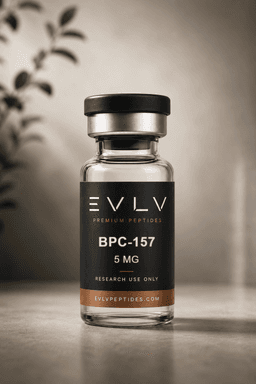
In practice, that means the purity number worth trusting is the one you can trace back to a specific lot, a specific test date, and a lab that is not the seller. EVLV publishes a certificate of analysis for every batch, searchable by the lot code printed on the vial, so a purity claim is never something you have to take on faith.